Op woensdag 26 mei 2021 zal Dr. Robert Boessenecker om 20.00 uur speciaal voor onze leden langskomen om te vertellen over zijn onderzoek naar de Carcharocles megalodon. Om alvast een beter idee te krijgen van de inhoud van de lezing, kan je de abstract van Dr. Boessenecker hieronder alvast doorlezen. Inschrijven is alleen geopend voor leden van Paleobiologische Kring en kan door je hier in te schrijven via het Google Inschrijvingsformulier.
Kijk voor het inschrijven voor de andere lezingen op de pagina van de: Spring Paleo Lecture Series 2021.
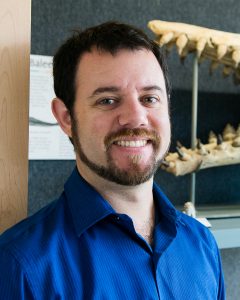
Abstract – “The Rise and Fall of Megalodon”
Fossil teeth of the gigantic predatory shark Carcharocles megalodon are found worldwide during the Miocene and Pliocene epochs, the end of a 50+ million year lineage of unusually large sharks. The teeth are not only prized collector’s items, but speak to an ecological mystery: the world’s oceans must have been quite different, in an ecological sense, just a few million years ago – so what happened? What caused the demise of the megatoothed sharks? Various hypotheses including long term climate change, sea level fall, changes in oceanic currents and productivity, change in the body size of prey species, competition with predatory cetaceans, competition from other sharks, or simply being caught up in a proposed marine vertebrate extinction 2 million years ago have all been floated as possible explanations. Key to all of this is establishing a firm chronology and estimating when C. megalodon actually went extinct. A worldwide reanalysis of dates of the youngest known specimens, and a wealth of new data from the west coast of North America, helps us pin down the timing – and cause – for the extinction of this massive predator.